With Programmatic advertising trends taking center stage, this dynamic field is transforming the way businesses engage with consumers. The marriage of technology and advertising has unlocked unprecedented opportunities for targeting audiences with remarkable precision and efficiency.
From the latest advancements in artificial intelligence to the intricate dance of data privacy regulations, the landscape of programmatic advertising is constantly evolving. This expansion is particularly impactful in sectors like real estate, where agents are finding innovative ways to reach potential buyers through tailored ad campaigns.
Emerging Trends in Programmatic Advertising
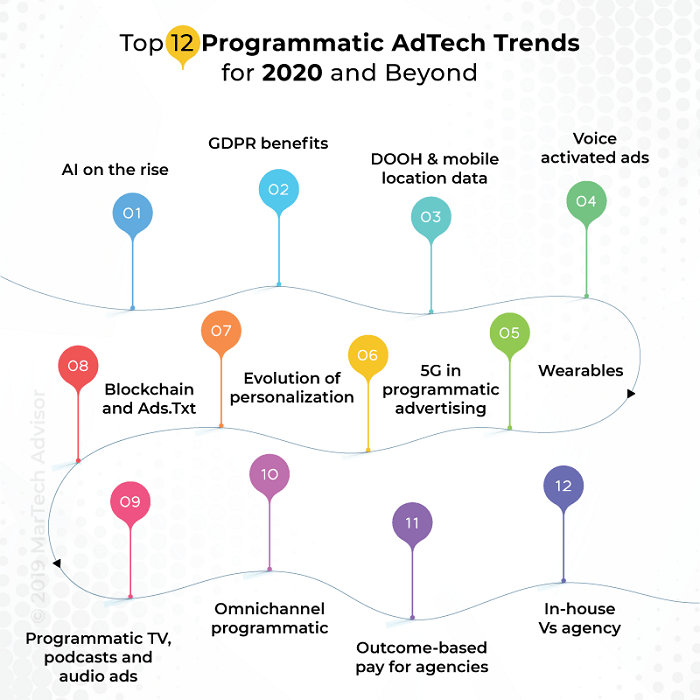
Programmatic advertising continues to evolve rapidly, driven by technological advancements and changing consumer behavior. As brands seek more efficient ways to reach their target audiences, understanding the emerging trends in programmatic advertising is essential for staying competitive. This segment will highlight the latest advancements, the role of artificial intelligence, and the impact of data privacy regulations on programmatic practices.
Advancements in Programmatic Advertising Technology
The landscape of programmatic advertising is being reshaped by various technological advancements. One significant trend is the rise of supply-side platforms (SSPs) that enable publishers to manage their advertising space more effectively. This technology allows for real-time bidding, maximizing ad revenue while providing advertisers with better inventory access. Another important advancement is the growth of connected TV (CTV) advertising, which allows brands to reach consumers on their televisions through streaming services.
This shift has created new opportunities for targeted ad placements in a more engaging environment.
Artificial Intelligence in Programmatic Ad Strategies
Artificial intelligence (AI) is fundamentally transforming programmatic ad strategies. AI algorithms analyze massive amounts of data to identify patterns and predict consumer behavior, enabling advertisers to deliver personalized experiences. Machine learning models continuously optimize ad placements and budgets based on real-time performance data, ensuring that campaigns achieve better results. For instance, AI-driven tools can automatically adjust bids and target demographics based on performance metrics, enhancing efficiency and effectiveness.
“AI in programmatic advertising enhances efficiency and optimizes campaign performance through data analysis and predictive insights.”
Impact of Data Privacy Regulations on Programmatic Advertising Practices
The introduction of stricter data privacy regulations, such as the General Data Protection Regulation (GDPR) and the California Consumer Privacy Act (CCPA), has significantly impacted programmatic advertising practices. Advertisers must now navigate complex compliance requirements, which has led to changes in data collection and user consent processes. Brands are increasingly focusing on first-party data strategies, relying on direct interactions with customers to gather insights while ensuring privacy compliance.
Additionally, the shift towards cookieless solutions is prompting advertisers to explore alternative methods for audience targeting, such as contextual advertising.
“Adapting to data privacy regulations necessitates innovation in audience targeting and data management practices.”
Programmatic Advertising in Real Estate
Programmatic advertising is revolutionizing how real estate agents connect with potential buyers, offering unmatched precision and efficiency in targeting. With its data-driven approach and automation, programmatic advertising allows agents to reach a diverse audience effectively while optimizing their marketing budgets. In an industry where understanding buyer behavior is crucial, leveraging this technology can lead to improved visibility and engagement with properties on the market.
Real estate agents can utilize programmatic advertising to target potential buyers based on various factors, such as demographics, online behavior, and geographic location. This method allows agents to serve personalized ads to users who are actively searching for properties, thus increasing the likelihood of conversion. By employing machine learning algorithms, agents can analyze vast amounts of data, enabling them to identify trends and preferences within specific buyer segments, which can inform their advertising strategies.
Best Practices for Targeting Specific Demographics
To maximize the effectiveness of programmatic advertising campaigns in real estate, it’s essential to follow best practices that enhance targeting accuracy. Understanding the target audience is crucial, as this informs the development of compelling ad content and the selection of appropriate platforms for distribution. Here are key practices to consider:
- Utilize Audience Segmentation: Segment the audience based on characteristics such as age, income level, family status, and interests. Tailor ads to resonate with each segment, highlighting features that appeal specifically to them.
- Leverage Retargeting Techniques: Implement retargeting strategies to re-engage users who have previously interacted with your website or listings. Retargeting hints that the audience is already interested, which can improve the chances of conversion.
- Incorporate Geo-targeting: Use geo-targeting to serve ads to potential buyers in specific locations. This is particularly effective in real estate, where location plays a significant role in decision-making.
- Analyze Data Continuously: Regularly review and analyze campaign data to assess which demographics are responding best to your ads. Adjust targeting parameters in real-time to optimize performance further.
- Utilize High-Quality Visuals: Invest in high-quality images and videos of properties, as visually appealing content can capture attention quickly and improve click-through rates.
“The key to successful programmatic advertising in real estate is not just in reaching potential buyers, but in reaching the right buyers with the right message at the right time.”
Successful programmatic advertising strategies in real estate showcase the potential of targeted campaigns to drive engagement and sales. For example, a real estate agency in San Francisco implemented a programmatic campaign that focused on high-income professionals moving into the area. By utilizing data analytics, they created personalized ads showcasing upscale properties, which resulted in a 30% increase in inquiries over a six-month period.
Another example comes from a property developer that used programmatic advertising to promote a new residential project. They utilized geo-targeted ads to reach individuals searching for homes in nearby neighborhoods, significantly increasing foot traffic to their open houses. The campaign effectively highlighted nearby amenities and community features, resulting in several quick sales.
These examples illustrate how real estate agents can harness programmatic advertising to create tailored marketing campaigns that resonate with prospective buyers, ultimately leading to successful transactions.
Future of Programmatic Advertising
The landscape of programmatic advertising is set to undergo significant evolution over the next five years, driven by technological advancements and changing consumer behaviors. As more businesses transition towards digital platforms, the capabilities of programmatic advertising will expand, enabling advertisers to deliver more targeted, efficient, and engaging campaigns.The anticipated changes in programmatic advertising will likely revolve around several key areas, including enhanced data utilization, increased automation, and the growing importance of artificial intelligence (AI) in optimizing ad placements.
Advertisers will harness advanced analytics to leverage consumer data more effectively, allowing for precise targeting and personalized messaging that resonate with specific demographics. As a result, this shift will minimize wasted ad spend and improve overall campaign performance.
Comparison of Traditional Advertising Methods and Programmatic Advertising Effectiveness in Real Estate
In the real estate sector, the effectiveness of programmatic advertising is starkly contrasted with traditional advertising methods. While traditional methods such as print ads, billboards, and direct mail have served their purpose, they lack the precision and adaptability that programmatic solutions offer. The following points illustrate the comparative advantages of programmatic advertising:
- Targeting Capabilities: Unlike traditional methods, programmatic advertising allows for highly specific audience targeting based on demographics, behaviors, and interests, leading to more relevant ad placements.
- Cost Efficiency: Programmatic ads can be executed at scale with lower costs compared to traditional campaigns, which often involve substantial upfront expenses without guaranteed returns.
- Real-Time Analytics: Advertisers can track performance in real-time, enabling immediate adjustments to optimize campaigns, whereas traditional methods typically rely on delayed metrics.
- Increased Reach: Programmatic advertising has the potential to reach a broader audience through various digital channels, while traditional advertising may limit exposure to specific geographic areas.
The transition to programmatic platforms is becoming increasingly vital for real estate firms aiming to stay competitive in a rapidly changing market.
Potential of Real-Time Bidding in Commercial Property Advertising
Real-time bidding (RTB) represents a groundbreaking shift in how commercial property advertising is approached. This technology enables advertisers to purchase ad space in milliseconds, ensuring that ads are displayed to the right audience at the opportune moment. The implications of RTB for commercial property advertising are substantial, as Artikeld below:
- Dynamic Pricing: RTB allows for flexible pricing based on demand, ensuring that advertisers only pay for ads when relevant audience segments are targeted, thus maximizing return on investment.
- Enhanced Competition: With multiple advertisers competing for the same audience in real-time, the quality of ads is likely to improve, leading to more engaging content for consumers.
- Improved Audience Insights: RTB provides valuable data on audience behavior and preferences, enabling advertisers to refine their strategies and effectively tailor their messaging.
- Increased Speed to Market: The efficiency of RTB allows for quicker campaign launches, enabling real estate firms to respond swiftly to market conditions and opportunities.
Through these advancements, real-time bidding is poised to transform commercial property advertising, making it more efficient, responsive, and customer-centric.
Final Review
As we look ahead, the future of programmatic advertising promises exciting developments that will redefine marketing strategies. With the potential of real-time bidding and enhanced targeting capabilities, businesses that embrace these trends will undoubtedly hold a competitive advantage in their respective markets.
Questions and Answers
What is programmatic advertising?
Programmatic advertising is the automated buying and selling of online advertising space, allowing for more efficient and targeted ad placements.
How does AI influence programmatic advertising?
AI enhances programmatic advertising by enabling smarter targeting, optimizing ad placements, and improving overall campaign performance through data analysis.
What are the benefits of programmatic advertising in real estate?
Programmatic advertising in real estate allows agents to efficiently target specific demographics, increase visibility for listings, and utilize data-driven insights for better decision-making.
How has data privacy impacted programmatic advertising?
Data privacy regulations have led to more stringent compliance requirements, pushing advertisers to adopt transparent data practices while still effectively reaching their audiences.
What does the future hold for programmatic advertising?
The future of programmatic advertising is expected to bring advancements in real-time bidding, improved AI technologies, and further integration of data privacy measures, enhancing overall effectiveness.